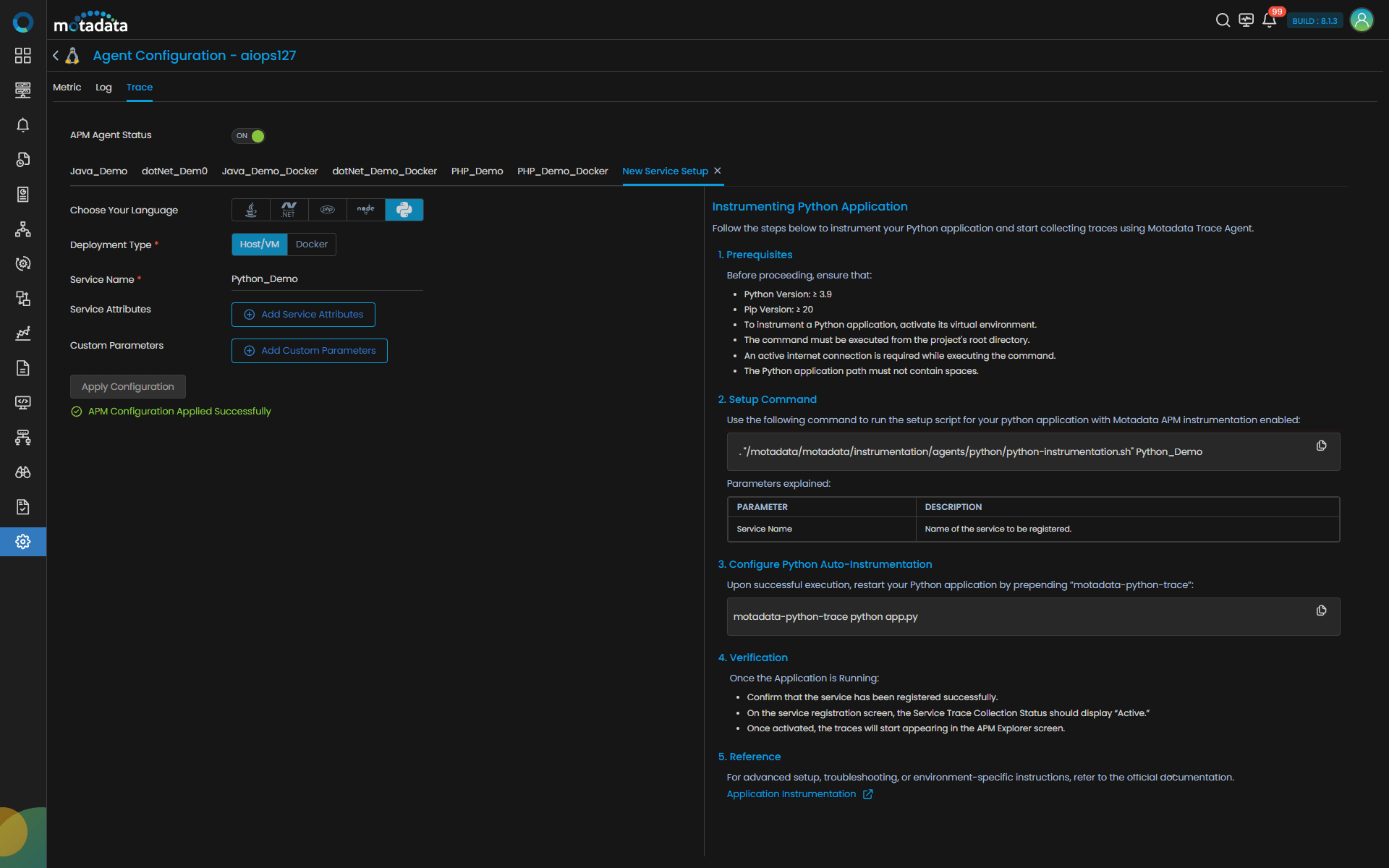
Python Application Support Added in APM
With this release, Motadata AIOps brings Python Application support to APM. This enhancement allows for more comprehensive monitoring and management of Python-based applications within the Application Performance Management system.
Organizations often manage this area through fragmented tools or manual processes, reducing visibility, consistency, and ownership.
The enhancement can reduce manual work, improve operational control, and help teams respond faster with better context.
HPE MSA Monitoring Support Added
With this release, monitoring support for HPE MSA (Modular Smart Array) has been introduced. This new feature enables users to monitor and manage HPE MSA storage systems directly from the platform.
Organizations often manage this area through fragmented tools or manual processes, reducing visibility, consistency, and ownership.
The enhancement can reduce manual work, improve operational control, and help teams respond faster with better context.
Slack Integration Implemented
With this release, Slack Integration has been implemented. This new integration allows users to connect the platform with Slack, enabling seamless communication and notifications within their existing workflow tools.
Organizations often manage this area through fragmented tools or manual processes, reducing visibility, consistency, and ownership.
The enhancement can reduce manual work, improve operational control, and help teams respond faster with better context.
Correction and Penalty Profile Support in SLO
With this release, Correction Profile and Penalty Profile support has been implemented in Service Level Objectives (SLO). This new capability provides more flexibility in managing and enforcing SLOs, including the ability to apply corrections and penalties based on predefined criteria.
Organizations often manage this area through fragmented tools or manual processes, reducing visibility, consistency, and ownership.
The enhancement can reduce manual work, improve operational control, and help teams respond faster with better context.
Photon OS Monitoring Enabled
Photon OS Monitoring support has been added to the platform. Users can now monitor and manage VMware's Photon OS, expanding the range of supported operating systems for comprehensive infrastructure monitoring.
Organizations often manage this area through fragmented tools or manual processes, reducing visibility, consistency, and ownership.
The enhancement can reduce manual work, improve operational control, and help teams respond faster with better context.
Bulk Run and Flapping Support in Rule-Based Tagging
Motadata AIOps introduces Bulk run and Rule flapping support in Rule-based tagging. This new feature allows for more efficient management of tags across multiple resources and provides mechanisms to handle rule flapping scenarios.
Organizations often manage this area through fragmented tools or manual processes, reducing visibility, consistency, and ownership.
The enhancement can reduce manual work, improve operational control, and help teams respond faster with better context.
Added Update Support for NCCM Credential Profiles
With this release, update Credential Profile support has been added to Network Configuration and Compliance Management (NCCM). This enhancement allows users to modify existing credential profiles, improving the flexibility and security of network device management.
Organizations often manage this area through fragmented tools or manual processes, reducing visibility, consistency, and ownership.
The enhancement can reduce manual work, improve operational control, and help teams respond faster with better context.
Implemented Edit Support in Custom Report Category
With this release, an edit option for Custom report categories has been implemented. Users can now modify and update custom report categories, providing greater control over report organization and classification.
Organizations often manage this area through fragmented tools or manual processes, reducing visibility, consistency, and ownership.
The enhancement can reduce manual work, improve operational control, and help teams respond faster with better context.
Added Brand Logo Support in Excel Reports
A new feature has been added to export brand logos in Excel reports. This functionality enhances the visual customization of reports, allowing users to include their organization's branding in exported Excel documents.
Organizations often manage this area through fragmented tools or manual processes, reducing visibility, consistency, and ownership.
The enhancement can reduce manual work, improve operational control, and help teams respond faster with better context.
Added AIOps and ServiceOps Integration Advancements
With this release, AIOps and ServiceOps Advanced Integration has been introduced. This new integration allows users to fetch key fields from ServiceOps, such as Category, Department, Location, and Technical Group, and map them in the Integration Profile.
Organizations often manage this area through fragmented tools or manual processes, reducing visibility, consistency, and ownership.
The enhancement can reduce manual work, improve operational control, and help teams respond faster with better context.
Added Instance Selection in Custom Script Reports
With this release, Instance selection in Custom Script Reports has been added. This new feature provides users with more granular control over which instances are included in custom script-based reports.
Organizations often manage this area through fragmented tools or manual processes, reducing visibility, consistency, and ownership.
The enhancement can reduce manual work, improve operational control, and help teams respond faster with better context.
Concurrent Login Restriction for User Sessions
With this release, Login Restriction for concurrent user sessions has been introduced. This new security feature allows administrators to limit the number of simultaneous logins for a user account, enhancing overall system security.
Organizations often manage this area through fragmented tools or manual processes, reducing visibility, consistency, and ownership.
The enhancement can reduce manual work, improve operational control, and help teams respond faster with better context.
Added NCCM Context in Monitor Templates
NCCM Context has been added to Monitor Templates. This new feature allows users to incorporate Network Configuration Management context into monitoring templates, providing more comprehensive and integrated monitoring capabilities.
Organizations often manage this area through fragmented tools or manual processes, reducing visibility, consistency, and ownership.
The enhancement can reduce manual work, improve operational control, and help teams respond faster with better context.
SLO Trend Drill-Down Added
SLO Trend drill-down to degraded entities has been implemented. Users can now drill down into Service Level Objective trends to identify and analyze specific entities that are not meeting performance targets.
Organizations often manage this area through fragmented tools or manual processes, reducing visibility, consistency, and ownership.
The enhancement can reduce manual work, improve operational control, and help teams respond faster with better context.